Planted aquarium for beginners: the honest starter guide
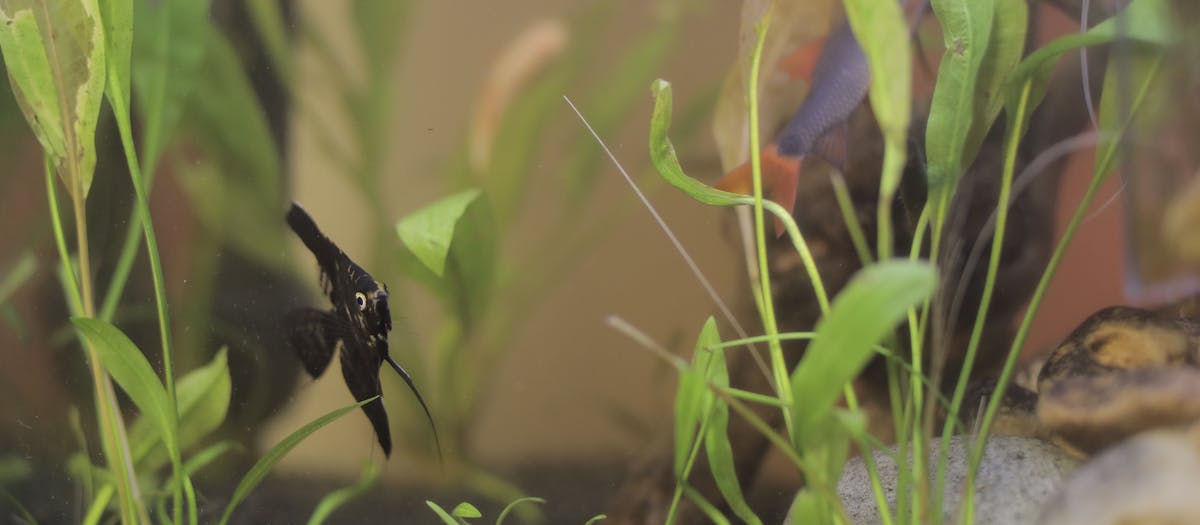
Setting up your first planted aquarium is not complicated, but it is full of small decisions that compound if you get them wrong. A reasonable low-tech build runs about $300 before fish; a high-tech CO2 build is closer to $600. Picking the wrong tank size or the wrong light is the most expensive mistake first-year keepers make, because both are hard to swap once the tank is wet.
This page walks every decision in the order it actually matters: the low-tech vs high-tech fork, then tank size, then the gear list, then cycling, then plants, then the first-month milestones. By the end you will know what to buy, in what order, and what you can skip.
A quick note before we start. I have been running a 60-gallon mid-tech tank in Portland for a few years — rummynose tetras, otocinclus, amano shrimp, a Monte Carlo and dwarf hairgrass carpet under a Twinstar S-line light. About half the advice below comes from getting something wrong on that tank first. If you are already keeping a planted aquarium and you are here for the gear comparisons, jump to the silo that applies. If you are at the dreaming stage, read top to bottom.
Before you buy anything (the four checks)
Four things to settle before any money changes hands. Skip these and you risk a build that cannot deliver what you imagined, or a tank that sits empty for a month while you wait on replacement gear.
Pick the path: low-tech or high-tech
This is the single biggest decision in the hobby. A low-tech tank runs without pressurised CO2 — easier plants, lower running cost, slower growth, fewer maintenance hours per week. A high-tech tank injects CO2 to roughly 30 ppm, runs brighter lighting, and supports the demanding carpets and reds. Both work. They are not the same hobby.
Most first builds should be low-tech. Get the basics right — cycling, dosing, water changes — without also learning CO2 timing and drop checkers. Upgrade later if you want to.
Pick the spot
Tank placement decides more than you think. The right spot has:
- Level, sturdy floor — a 20-gallon full of water weighs about 220 pounds, a 55 closer to 625.
- No direct sunlight on the tank — sun-fed algae is the worst kind to clear.
- Reasonable distance to a power outlet and a sink for water changes.
- Out of the way of foot traffic, but where you will actually look at it.
- Room for a stand and a sump or canister if you go that route later.
The "we'll move it after" plan rarely works. Drain a full tank only if you must — assume the first spot is the forever spot.
Time commitment
Daily: 2 to 5 minutes — eyeball the fish, check the heater is on, top up evaporation, feed
lightly.
Weekly: 30 to 60 minutes — water change, glass clean, trim, dose fertiliser, test parameters
during the first two months.
Monthly: extra hour for filter rinse and a deeper trim.
It is less than a dog. It is more than a fish bowl.
Budget honestly
Low-tech starter: tank, hood or stand, light, filter, heater, substrate, plants, dechlorinator, test kit — figure $250 to $350 for a 20-gallon. High-tech adds a CO2 system, diffuser, drop checker, brighter light, and dosing pumps — another $250 to $400 on top. Live plants run $30 to $80 for a starter set; aquascape hardscape (driftwood, stone) adds $30 to $100.
The short version: Pick low-tech or high-tech before anything else, find a level spot with no direct sun and a nearby outlet, and budget $300 for a low-tech 20-gallon build or $600 for a high-tech one. Plants and fish come last, not first.
The tank
The tank is the biggest single decision and the hardest to undo. Size, dimensions, and glass quality decide what plants you can keep and how hard the rest of the build has to work.
Size — bigger is easier, up to a point
Counter-intuitive but true: a bigger tank is more forgiving than a small one. More water means slower parameter swings, easier temperature stability, and more room for plants to mop up nitrates. The 20-gallon long (30 × 12 × 12 inches) is the most-recommended beginner size for good reason — it is genuinely planted-tank-friendly, and the wide footprint lets you aquascape properly.
- 10 gallon — Tight on swimming room, swings fast on nitrates and temperature. Fine for a shrimp tank or a single betta with plants.
- 20 gallon long — The beginner sweet spot. Footprint over height.
- 29 gallon — More water, more vertical room, slightly harder to light to the substrate.
- 55 gallon — Genuine aquascape territory. More plants, more cost, less margin for error on light and CO2.
Dimensions over volume
A 20-gallon tall is a worse planted tank than a 20-gallon long, despite holding the same water. Footprint and depth matter — long, shallow tanks aquascape well and light cheaply. A tall tank wastes water column and forces you into a brighter, more expensive light.
Rimless or rimmed
Rimless tanks look the part and let light penetrate evenly. Rimmed tanks are cheaper and perfectly fine. For a first build, save the rimless money for a better light or a CO2 system.
Substrate
Substrate is the foundation of a planted tank, and the one thing that is genuinely hard to change once the tank is wet. Get it right the first time.
The two approaches
- Aquasoil — A nutrient-rich, baked-clay substrate. Lowers pH slightly, feeds root plants for six to twelve months, supports almost any species. Soft enough for delicate roots. The default for serious planted tanks.
- Inert + cap — Plain gravel or sand, with root tabs added for root-feeders. Cheaper, lasts forever, never needs replacing. Works fine for low-tech, but you carry the dosing load.
The cap method
A capped substrate puts a nutrient-rich base (clay, peat, dirt) underneath, with an inch and a half of inert sand or gravel on top to keep the base from clouding the water. Cheaper than pure aquasoil and effectively permanent. Done right, it is the longest-lasting nutrition the hobby offers. Done wrong, you have brown water for a month.
How deep
One and a half to two inches in the front of the tank, sloping up to three or four inches at the back. The slope reads better visually and gives root-runners room to spread.
Light
The light is what makes a planted tank a planted tank. Get it wrong and you grow algae instead of plants — no amount of dosing fixes a light mismatched to the tank.
PAR matters, watts do not
Older guides talk about watts per gallon. Ignore them. Modern LED lights produce wildly different photosynthetically active radiation (PAR) per watt, and PAR at the substrate is what plants actually see. A 30-watt budget LED can deliver less usable PAR than a 20-watt high-end one.
The two intensity bands
- Low light (20–40 PAR at substrate) — Anubias, java fern, cryptocoryne, hornwort. No CO2 needed.
- Medium light (40–80 PAR at substrate) — Stem plants, carpets, most aquascape species. CO2 strongly recommended above 50 PAR.
A first build should target the low-to-medium band, with the option to raise the light if you upgrade later. Most quality LEDs ship with a dimmer or an app — use it.
Photoperiod
Six to eight hours a day, on a timer. Longer than that without CO2 and you are feeding algae. Many planted-tank keepers run a six-hour photoperiod for the first month, then ramp to seven or eight once the plants are growing.
Filter, heater, the boring gear
The unglamorous parts. Get them right once and they outlast everything else in the build.
Filter
- Hang-on-back (HOB) — Cheapest, easiest to maintain. Surface agitation is the trade-off, which is fine in low-tech and a problem in high-tech because it off-gases CO2.
- Canister — Quieter, more media volume, more flexible on outflow placement. The right answer for any tank above 29 gallons or any high-tech build.
- Sponge filter — Cheap, gentle, shrimp-friendly. Good supplement, mediocre primary.
Aim for four to six times tank turnover per hour for low-tech, six to ten for high-tech. Manufacturer ratings inflate — a filter rated for 50 gallons typically does 30 in real life.
Heater
Five watts per gallon as a rule of thumb. Stick to a known brand with an external controller or accurate dial. Tetra, Eheim Jager, Fluval, and Cobalt are the brands that show up in hobbyist forums for years without complaint. Cheap eBay heaters are how tanks cook overnight.
The little things
- Dechlorinator — Seachem Prime is the hobby standard.
- Liquid test kit — API Freshwater Master is the cheap default; Salifert is more accurate.
- Plant scissors and tweezers — long, aquascaping-grade, not kitchen substitutes.
- Algae scraper — magnetic for glass, blade for stubborn spots.
- Two buckets — one for clean water, one for waste. Never the same.
The plants (start easy)
The fun part. Pick four to six species for a first build, leaning heavily on the easy end of the care spectrum. Plant heavy from day one — a sparsely planted tank grows algae while you wait.
The beginner shortlist
- Anubias nana — Attach to wood or stone, never bury the rhizome. Low light, no CO2.
- Java fern — Same rules as anubias. Slow grower, tolerant of almost everything.
- Cryptocoryne wendtii — Root-planted, root tabs help. Melts on transition, comes back stronger.
- Hornwort — Fast-growing stem or float. Sucks up nitrates and outcompetes algae.
- Amazon sword — Background plant for 29-gallon+ tanks. Heavy root-feeder.
- Vallisneria — Tall background grass. Spreads via runners.
Skip Monte Carlo, dwarf hairgrass, hemianthus, rotala, and the red-stem plants on a first build. They want medium-to-high light and CO2 to thrive.
Buying tips
Buy from a planted-tank specialist, not a big-box pet store. Inspect for snails and pest algae before adding. Dip new plants in a 1:19 bleach-to-water solution for 90 seconds, rinse thoroughly, then plant — that one step prevents a lot of grief. See our anubias buyer and care guide for a full walkthrough of the easiest species.
Cycling the tank
Cycling is the process of growing a colony of beneficial bacteria in the filter that converts fish waste (ammonia) to nitrite, and then to less-toxic nitrate. Adding fish before the cycle is complete is the textbook beginner mistake — and it usually kills the fish.
Fishless cycle (the right way)
- Set up the tank with substrate, hardscape, plants, filter and heater. Fill with dechlorinated water.
- Dose ammonia (pure janitorial-grade ammonia, no surfactants) to about 2 ppm.
- Test daily. Within 1–2 weeks, ammonia drops and nitrite spikes.
- Within 3–6 weeks, nitrite drops to zero and nitrate climbs.
- Once 2 ppm of ammonia converts fully to nitrate within 24 hours, the tank is cycled.
- Do a 50% water change to drop nitrates, then add fish gradually.
Seeded cycle (the faster way)
Take a piece of filter sponge or biomedia from an established, disease-free tank — a friend's, a local fish store's spare, or one of your own established tanks — and run it in the new filter. The cycle compresses to one to two weeks. Still test before adding fish; the ammonia-to-nitrate conversion at 2 ppm is the only proof.
Plants accelerate the cycle
Live plants consume ammonia directly through their leaves and roots. A heavily planted tank cycles in days rather than weeks because the plants are doing the bacteria's job. The catch is that you cannot trust ammonia readings on a heavily planted new tank — let it run for two weeks regardless, dose ammonia and confirm conversion, then stock.
The first-month milestones
What to expect, week by week, on a typical low-tech build.
- Week 1 — Diatom bloom likely (brown dust on glass and plants). Normal. Wipe off, do not panic.
- Week 2 — Plants may melt some leaves as they transition to your water chemistry. New growth follows.
- Week 3 — Cycle progressing if you seeded the filter. Ammonia trending down, nitrite spiking.
- Week 4 — Add the first 3 to 5 fish if parameters are zero/zero on ammonia and nitrite.
- Week 6 — Add the next group of fish. Plants noticeably filling in.
- Week 8 — First trim. The tank starts looking like the photos you saved.
Common rookie mistakes
1. Buying a tall tank instead of a long one
A 29-gallon tall has the same volume as a 20-gallon long, but the long aquascapes better, lights cheaper, and shows the fish better. Footprint over height, every time.
2. Skipping the cycle
"I added fish on day three, they look fine" is the comment that ages worst. Cycling is the step that decides whether week-six fish die. Test, do not guess.
3. Underplanting
A sparsely planted new tank grows algae instead of plants. Plant heavy from day one — at least 50% of the substrate area covered or shaded — and trim back later. Easy fast growers (hornwort, water sprite, vallisneria) do the heavy lifting.
4. Running the light too long
Ten hours sounds reasonable. It is not. Six to eight hours is plenty for a planted tank, and any longer without CO2 invites algae. Put the light on a timer the day you set it up.
5. Burying anubias and java fern rhizomes
The rhizome — the thick horizontal stem that the leaves and roots grow from — needs to be above the substrate. Bury it and the plant rots in a few weeks. Tie it to wood, stone, or decor with cotton thread or a small drop of superglue gel; the roots find their own purchase.
6. Overdosing fertiliser to fix algae
Algae usually means too much light, not too little nutrient. More fertiliser on top of an already-imbalanced tank makes the algae faster. Cut the photoperiod, add more fast growers, and dose only after the light has been corrected.
7. No quarantine on new fish
Most disease outbreaks come from un-quarantined new fish. A two-week stay in a separate container with the same heater and a sponge filter saves entire established tanks. Worth the $30 in spare gear.
What to read next
The four silos pick up from here.
Frequently asked questions
What size tank is best for a planted aquarium beginner?
A 20-gallon long is the sweet spot. It is big enough that water parameters stay stable, small enough to light and dose without spending a fortune, and the footprint suits aquascaping better than a tall tank. A 10-gallon works but swings hard on temperature and nitrates.
Do I need CO2 for a planted aquarium?
No. A low-tech planted tank with easy plants — anubias, java fern, cryptocoryne, hornwort — runs without CO2 indefinitely. Pressurised CO2 is what unlocks the demanding species and bright carpets, but it adds about $200 to setup and a weekly maintenance check.
How long does it take to cycle a planted aquarium?
Four to six weeks for a traditional fishless cycle, or one to two weeks if you seed the filter with media from an established tank. Heavily planted tanks cycle faster because the plants consume ammonia directly. Test with a liquid kit; ammonia and nitrite must read zero before fish.
What is the easiest plant for a beginner planted tank?
Anubias nana. It survives low light, no CO2, neglect, and most common dosing mistakes. Attach it to driftwood or rock — never bury the rhizome. Java fern and cryptocoryne wendtii are the runners-up in the same care bracket. Skip carpeting plants on a first build.
How much light does a planted aquarium need?
Six to eight hours a day at low-to-medium intensity for a beginner tank — about 20 to 40 PAR at the substrate. Run the photoperiod on a timer. Longer or brighter than that without CO2 and fertiliser dosing is the fastest way to grow algae instead of plants.
How often should I do water changes in a planted tank?
Weekly 25 to 30 percent water changes for the first month, then every one to two weeks once the tank has settled. Match temperature, treat the new water with dechlorinator, and gravel-vacuum the open substrate. Heavily planted tanks need less vacuuming than bare ones.
What fish can I add to a planted tank?
Most community fish work, but plant-safe choices include tetras, rasboras, corydoras, otocinclus, guppies, and most shrimp. Avoid known plant-eaters: silver dollars, large goldfish, and most cichlids. Add slowly — three to five fish a week after cycling, watching parameters.
Do aquarium plants need fertiliser?
Yes, in almost every case. Root-feeders like swords and cryptocoryne want root tabs in the substrate. Stem and floating plants take in nutrients from the water column, so they want a weekly liquid all-in-one dose. Aquasoil substrate covers the first six months on its own.
Why is my planted tank growing algae?
Algae is usually a light-versus-nutrient mismatch. Too much light, not enough plants, missing macros, or skipping water changes. Cut the photoperiod to six hours, add fast-growing stem plants, and dose all-in-one fertiliser weekly. Algae eaters help; they do not fix the cause.
My fish looks sick — what should I do?
Move the fish to a quarantine container, test the main tank water for ammonia, nitrite, nitrate and pH, and call a local aquatic vet or your state extension service. Avoid forum-diagnosed medication regimens — they are how healthy tanks crash. Identify the cause before dosing anything.