Anubias: buyer and care guide for the easiest aquarium plant
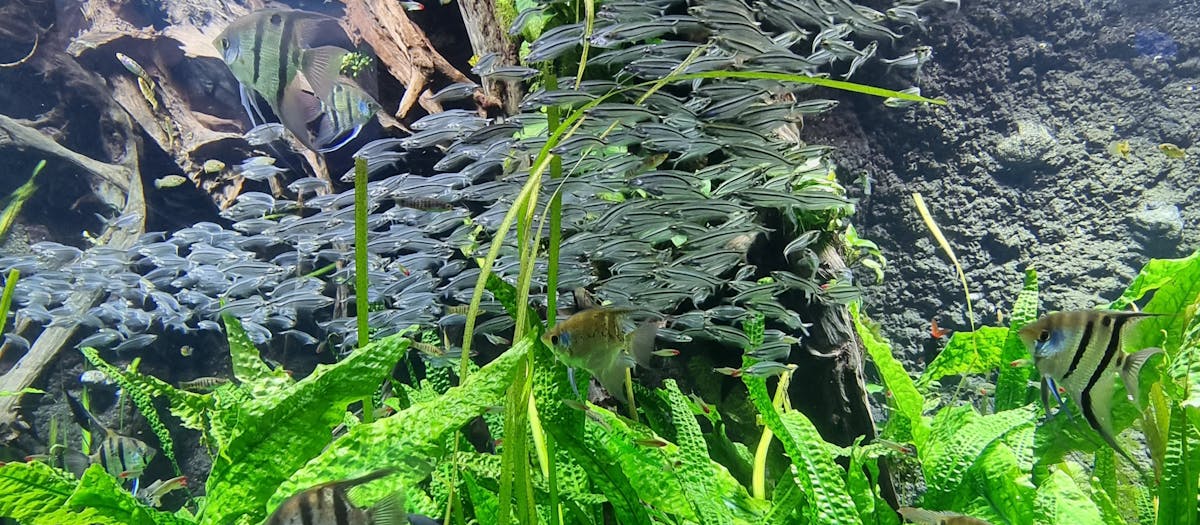
Anubias is the most forgiving plant in the freshwater hobby. Low light, no CO2, almost any water chemistry, and a tendency to live on a single piece of driftwood for years without complaint. If you want the short version: the best Best overall pick is a potted Anubias barteri var. nana from a mid-grade nursery — large enough to make a visual impact in a 20-gallon, forgiving enough to survive most rookie mistakes. The best nano pick is the Best small (nano), and the best value is the Best value bundle bundle.
Anubias is broadly the same plant across varieties — same rhizome-don't-bury rules, same slow growth, same low-light tolerance. The difference is size, leaf shape, and price. Specs verified against current Amazon and specialist-supplier listings. We have not lab-tested every variety, but I have kept anubias barteri and nana petite on my own 60-gallon tank in Portland for several years — these notes lean on that hands-on time.
Quick comparison
Five anubias offerings, side by side. Mature leaf size, light needs, growth rate, and the price band you can expect.
| Best for | Variety | Mature leaf size | Light needs | Growth rate | Price |
|---|---|---|---|---|---|
| Best overall | Anubias barteri var. nana | Approx. 2–4 in (5–10 cm) | Low light | Slow | $12.79 |
| Best small (nano) | Anubias barteri var. nana 'Petite' | Approx. 0.4–1 in (1–2.5 cm) | Low to medium light | Very slow | $12.87 |
| Best large specimen | Anubias barteri var. Coffeefolia | Approx. 3–5 in (7.5–12 cm), distinctive ridged/coffee-leaf texture | Low light | Slow | $9.99 |
| Best value bundle | Mixed Anubias — Barteri var. Glabra, Nana Golden Leaf, Congensis, Nana Bonsai Japan, Barteri var. Nana | Varies by cultivar (1–5 in / 2.5–12 cm) | Low to moderate light, little/no CO2 required | Slow | $22.99 |
| Best premium / tissue-culture | Anubias barteri 'Nana' Petite | Approx. 0.4–1 in (1–2.5 cm) | Low to medium (6–8 hr/day) | Slow — holds structure without frequent trimming | $17.99 |
Our top picks
Five picks, each matched to a buyer situation. Read the one that sounds like you — the "best for" tag at the top of each box is doing real work.
Best overall: Anubias Nana Live Aquarium Plant 2 Inch Pot Freshwater Low Light Easy Care Fish Tank Plant

Best overall
Anubias Nana Live Aquarium Plant 2 Inch Pot Freshwater Low Light Easy Care Fish Tank Plant
Canton Aquatics
- Variety: Anubias barteri var. nana
- Mature leaf size: Approx. 2–4 in (5–10 cm)
- Light needs: Low light
- Growth rate: Slow
- Source: Potted, bare-root, mid-grade nursery
Standard Anubias nana in a 2-inch nursery pot — the workhorse mid-grade specimen for tying to driftwood or rocks in a low-tech planted tank.
Last checked 2026-05-19
The default anubias for almost any planted tank. Broad leaves about three to five centimetres long, slow steady growth, and the right size to anchor a 20-gallon aquascape on a single piece of driftwood. A potted plant from a mid-grade nursery ships with a healthy root mass — remove the rockwool and pot before attaching to hardscape.
Who it is for: a first planted tank, a low-tech build, or any tank where the keeper wants a planted-tank look without the maintenance burden. What to watch: inspect for snail eggs on the underside of leaves and dip in bleach 1:19 for 90 seconds before adding to your tank — anubias tolerates that dip well.
Best small (nano): Marcus Fish Tanks Anubias Nana Petite Live Aquarium Plants Potted Freshwater Aquatic Plant

Best small (nano)
Marcus Fish Tanks Anubias Nana Petite Live Aquarium Plants Potted Freshwater Aquatic Plant
Marcus Fish Tanks
- Variety: Anubias barteri var. nana 'Petite'
- Mature leaf size: Approx. 0.4–1 in (1–2.5 cm)
- Light needs: Low to medium light
- Growth rate: Very slow
- Source: Potted, 20–30 leaves, live-arrival guarantee
Anubias Nana Petite is the smallest cultivar — micro leaves on a compact rhizome, ideal for nano foreground placement.
Last checked 2026-05-19
Petite is a miniature cultivar of nana — leaves about one centimetre long, the whole plant footprint a small handful. It is the right anubias for nano tanks (5 to 10 gallons), bonsai-style aquascapes, and the front-of-tank position in larger builds where a standard nana would look out of scale. Same care as nana, slightly higher price.
Who it is for: a nano-tank keeper, a shrimp tank, or anyone aquascaping with careful scale. What to watch: petite is slow even by anubias standards. Plan for six months before a small starter clump fills a 5-gallon nano front; the plant grows, but it grows on its own schedule.
Best large specimen: Anubias Barteri (Coffeefolia) — Dark Green, Strong Root Structure, All-Natural Aquatic Plant

Best large specimen
Anubias Barteri (Coffeefolia) — Dark Green, Strong Root Structure, All-Natural Aquatic Plant
Canton Aquatics
- Variety: Anubias barteri var. Coffeefolia
- Mature leaf size: Approx. 3–5 in (7.5–12 cm), distinctive ridged/coffee-leaf texture
- Light needs: Low light
- Growth rate: Slow
- Source: Loose rhizome with established roots
Coffeefolia is the textured-leaf large Anubias — new leaves emerge red-brown then mature dark green with a distinctive ‘coffee leaf’ ripple. Eye-catching as a focal-point specimen.
Last checked 2026-05-19
The large-specimen pick — varieties like coffeefolia (with its distinctive bronze, bubbled leaves) or barteri "barteri" (the largest standard form). Leaves run six to ten centimetres long. These read as a focal-point plant in a 29-gallon or larger aquascape, attached to a piece of driftwood that is in scale. A mature large-form anubias is genuinely impressive — and it takes years to get there.
Who it is for: a feature plant on a 29-gallon or larger aquascape; a keeper who wants visual impact from one well-placed specimen. What to watch: large anubias are usually shipped in a 5 cm pot and look small at first. Give them eighteen months on a single piece of driftwood before judging.
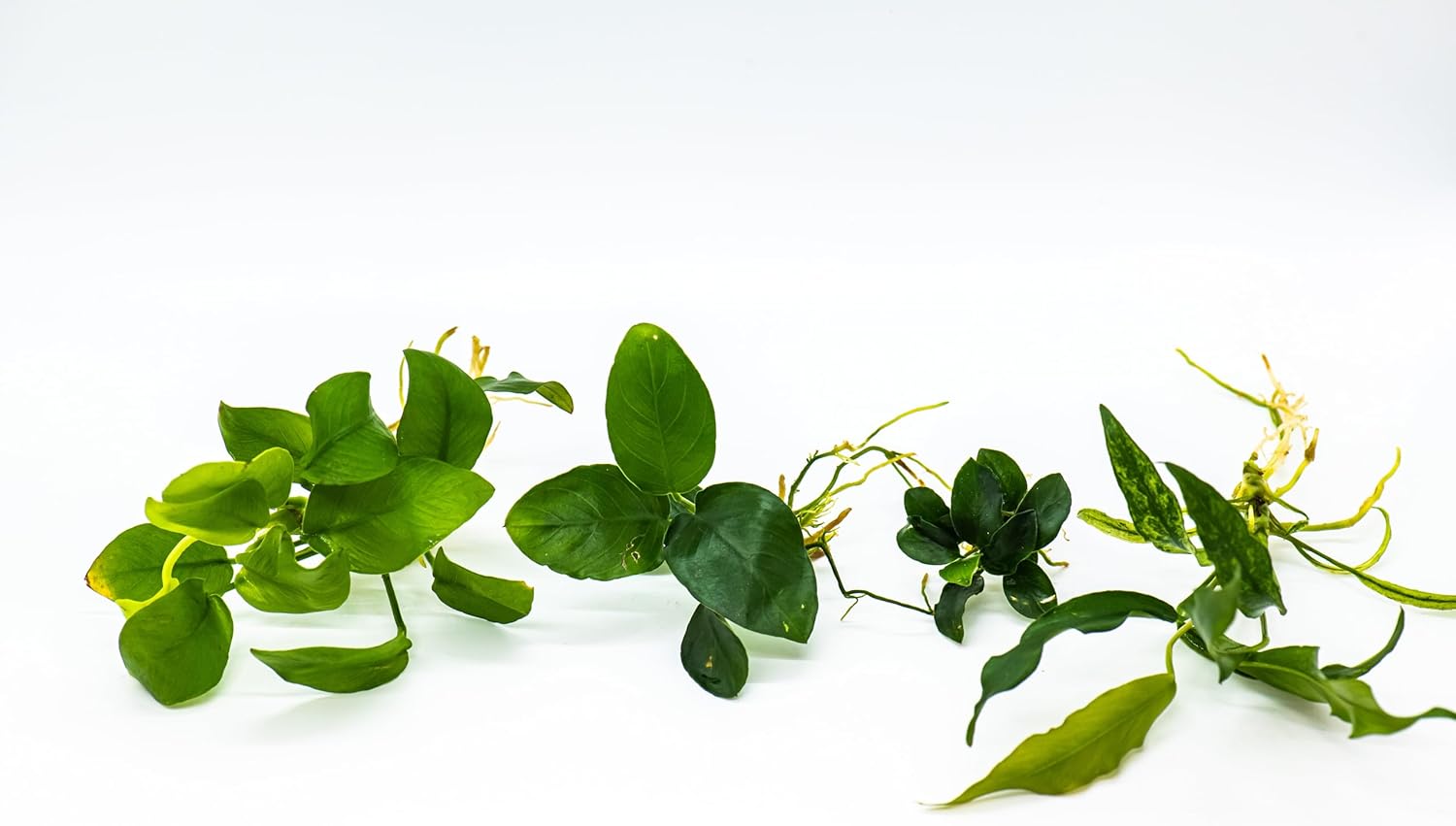
Best value bundle: Assorted Anubias Aquarium Plants Bundle — 4 Random Loose Plants
Best value bundle
Assorted Anubias Aquarium Plants Bundle — 4 Random Loose Plants
Generic (assorted Anubias)
- Variety: Mixed Anubias — Barteri var. Glabra, Nana Golden Leaf, Congensis, Nana Bonsai Japan, Barteri var. Nana
- Mature leaf size: Varies by cultivar (1–5 in / 2.5–12 cm)
- Light needs: Low to moderate light, little/no CO2 required
- Growth rate: Slow
- Source: 4 random loose plants per order
A four-plant grab-bag of Anubias cultivars at a per-plant price well below buying singles — best for filling out a tank in one order.
Last checked 2026-05-19
The value pick — a multi-plant bundle, usually three to five anubias of mixed varieties. Per-plant cost is meaningfully lower than buying individually, and the variety pack lets you experiment with which form fits your aquascape. Quality varies more than single-variety pots; expect at least one of the plants in the pack to be smaller than the listing photo suggests.
Who it is for: a buyer covering multiple positions in a single aquascape, or anyone who wants to try a few anubias varieties before committing to one. What to watch: bundle quality is hit-or-miss. Inspect on arrival; reputable sellers offer DOA replacement if anything looks unhealthy out of the bag.
Best premium / tissue-culture: Ultum Nature Systems Live Tissue Culture — Anubias Nana Petite (in-vitro, snail-free)

Best premium / tissue-culture
Ultum Nature Systems Live Tissue Culture — Anubias Nana Petite (in-vitro, snail-free)
Ultum Nature Systems
- Variety: Anubias barteri 'Nana' Petite
- Mature leaf size: Approx. 0.4–1 in (1–2.5 cm)
- Light needs: Low to medium (6–8 hr/day)
- Growth rate: Slow — holds structure without frequent trimming
- Source: Lab-grown tissue-culture cup, 100% snail/pest-free
Lab-grown in sterile in-vitro conditions — divide the plantlets, rinse the nutrient gel, and attach to hardscape. The clean-start option for keepers who don’t want to risk snail eggs or algae from a nursery pot.
Last checked 2026-05-19
Tissue-culture (in-vitro) anubias arrives in a sealed sterile cup, snail-free and pest-algae-free. It is the cleanest possible start for a shrimp tank or a quarantine build. The plants are small — usually a single plantlet or a small cluster — and need a few weeks to settle and transition to submerged growth. Price per plant is higher; peace of mind is the trade.
Who it is for: a shrimp keeper, a competition aquascape, or anyone who wants to eliminate any chance of pest snails or hitchhiker algae. What to watch: tissue culture anubias is tiny on arrival. Rinse the agar gel off thoroughly under dechlorinated water, separate the plantlets gently, and attach the largest to hardscape. Use the smaller plantlets to seed multiple spots in the tank.
Why anubias is the easiest planted-tank plant
Three reasons anubias is the most-recommended beginner plant in the hobby — and the plant most likely to still be on your driftwood in five years.
It survives low light
Anubias photosynthesises slowly and efficiently at low PAR. A modest planted-tank LED in the 20 to 40 PAR-at-substrate range is enough. Brighter light does not make it grow faster; brighter light makes it grow algae on the leaves. Six to eight hours of low-to-medium light per day is the recipe.
It does not need CO2
Most demanding planted-tank plants need pressurised CO2 to actually thrive — colour-up reds, fill in carpets, push fast stem growth. Anubias does not. It grows at the same modest pace with or without CO2. That is what makes it the default low-tech plant.
It tolerates almost any water chemistry
Soft or hard, slightly acidic or slightly alkaline, planted-tank temperatures or African cichlid temperatures — anubias handles it. The plant evolved on rocks and driftwood in west and central African streams, where water chemistry varies dramatically. That tolerance survives the leap into home aquariums intact.
How to plant anubias the right way
The single most common mistake with anubias is burying the rhizome. The rhizome — the thick horizontal stem that the leaves and roots grow from — needs to be above the substrate. Bury it and the plant rots within a few weeks. Here is the right way.
Attach to hardscape, not substrate
Tie the anubias to driftwood or rock with cotton thread (which dissolves once the roots take hold) or apply a small drop of cyanoacrylate gel superglue to the rhizome and press firmly to the hardscape for thirty seconds. Both methods hold within days. Choose the spot with the leaves angled toward the light, not buried under other plants.
Position relative to light
Anubias is most often placed in the middle of a tank — shaded enough to discourage leaf algae, but with enough light to keep new leaves green. Avoid placing it directly under a bright LED at high output; mid-tank or shaded by stems is the sweet spot.
Root attachment timeline
Roots emerge from the rhizome within a few weeks and slowly anchor to the wood or rock. Within a few months the cotton thread is unnecessary and dissolves on its own. After a year, a healthy anubias is genuinely glued to the hardscape.
Dosing, light, and ongoing care
Light
Low to medium light, 20 to 40 PAR at the leaves. A six to eight hour photoperiod on a timer. If the leaves develop algae, your light is too bright or your photoperiod is too long — cut by an hour and reassess after two weeks.
Fertiliser
Weekly all-in-one liquid fertiliser dose. Brands like Seachem Flourish Comprehensive or Tropica Premium cover the macro and micro nutrients anubias needs. Root tabs are not necessary because anubias does not root-feed in the substrate — its roots anchor, they do not draw nutrients meaningfully.
Maintenance
Almost none. Trim yellow or damaged leaves at the rhizome with clean scissors. Wipe leaves gently if a film of algae appears. Replant or attach to fresh hardscape every few years if the original wood breaks down. That is the entirety of anubias maintenance.
The anubias varieties, at a glance
- Anubias barteri var. nana — The default. Three to five cm leaves, mid-tank position, the standard recommendation.
- Anubias barteri var. nana "Petite" — Miniature. One cm leaves, nano-tank or aquascape front position.
- Anubias barteri var. coffeefolia — Bronze, bubbled, distinctive. Slightly larger than nana.
- Anubias barteri var. barteri — The standard large form. Six to ten cm leaves, focal plant for larger tanks.
- Anubias congensis (heterophylla) — Long narrow leaves, taller plant. Background position in 29-gallon and larger tanks.
- Anubias gigantea — The largest variety. 20 cm leaves, only suited to 75-gallon and larger aquascapes.
What to look for when you buy anubias
Anubias is sold widely but quality varies. Three things to check before you commit.
Healthy rhizome
The rhizome should be firm, light brown to greenish, with no soft or black sections. Mushy rhizome means rot has started — even if the leaves still look green, the plant is compromised.
Submerged-grown vs emersed-grown
Anubias tolerates both, but submerged-grown plants transition with less leaf melt. Sellers who specialise in aquarium plants usually note the grow-out method on the listing. If it is unclear, expect a few weeks of leaf shedding while the plant transitions.
Snail and pest-algae signs
Inspect under the leaves and around the rhizome for snail eggs (small jelly clusters) or pest algae (especially black brush algae on leaf edges). A 1:19 bleach-to-water dip for 90 seconds and a thorough rinse kills almost everything; anubias tolerates the dip well. Skip the dip on shrimp-bound plants and use the slow-quarantine approach instead.
Anubias vs java fern — which to start with
Java fern is the other rhizome-attached low-tech beginner plant, and the two are often sold side by side. Anubias has broader, glossier leaves and a more compact growth habit. Java fern has narrower, tougher leaves and spreads more aggressively via rhizome division and plantlets on its own leaves. Both want the same low-to-medium light and the same rhizome-above-substrate placement. Most beginner builds plant both — anubias for the focal points, java fern for filling gaps along driftwood and stone. Read the aquarium plants for beginners hub for the broader shortlist.
Frequently asked questions
How much light does anubias need?
Low to medium light — about 20 to 40 PAR at the leaves. Anubias photosynthesises slowly, so more light does not mean faster growth; it usually means more algae on the leaves. A modest planted-tank LED at six to eight hours a day is plenty. Bright lighting is the most common cause of black brush algae on anubias.
Does anubias need CO2?
No. Anubias grows perfectly well without pressurised CO2, which is part of why it is the most-recommended beginner plant. CO2 speeds growth slightly but is not required. A low-tech setup with weekly all-in-one fertiliser dosing is enough.
How do you attach anubias to driftwood or rock?
Tie with cotton or sewing thread (which dissolves over a few weeks once the roots take hold) or apply a small drop of cyanoacrylate gel superglue to the rhizome and press firmly to the hardscape for 30 seconds. Either method holds within a few days. Never bury the rhizome — it will rot.
Why are my anubias leaves turning yellow?
Yellowing leaves on anubias usually point to a potassium or iron deficiency. Add a weekly all-in-one liquid fertiliser dose. If the yellowing is on old leaves only with healthy new growth, the plant is simply shedding — trim the yellow leaf at the rhizome and discard.
How do you propagate anubias?
Cut the rhizome into sections with a clean blade, making sure each section has at least three leaves and a few roots. Attach each new section to its own piece of hardscape. New growth resumes within a few weeks. Slow plant, but reliable propagation.
What is anubias rhizome rot and how do you fix it?
Rhizome rot is what happens when the thick horizontal stem is buried or damaged — the rhizome turns black, mushy, and the plant collapses. The fix: cut away every soft section back to firm white tissue, attach the healthy remainder to hardscape, and never bury the rhizome again.
Are there pet-safe risks with anubias for fish or shrimp?
Anubias is non-toxic to fish, shrimp, snails and most invertebrates. Many keepers run anubias-only tanks for shrimp because the broad leaves make excellent grazing surfaces. The one risk is dipping new anubias in bleach to kill snails — rinse thoroughly before adding to a shrimp tank, as shrimp are bleach-sensitive.
What is the difference between Anubias Nana and Anubias Petite?
Petite is a smaller cultivar of Anubias barteri var. nana — leaves are about 1 cm long instead of 3 to 5 cm, and overall plant footprint is much smaller. Petite is preferred for nano tanks and the front of larger aquascapes. Care is identical; price is usually 30 to 50 percent higher.
How long does anubias take to grow?
Slow. One to two new leaves per month is normal in good conditions. Anubias is the marathon runner of planted-tank plants — it does not grow fast, but it grows reliably for years on the same piece of hardscape. Patience pays off; a five-year-old anubias can be a foot wide.
How do I treat algae growing on anubias leaves?
Spot-treat the affected leaves with diluted hydrogen peroxide (3% solution, applied with a syringe outside the tank while the leaves are above water for 30 seconds, then rinsed). Reduce the photoperiod to six hours. Add algae grazers — amano shrimp, otocinclus or nerite snails. If the algae returns, the underlying cause is usually too much light or too few plants for the tank.